
The Newcomer's Guide to Renting in the US
Renting your first US apartment is hard, and most of the difficulty has nothing to do with money. Landlords ask for a US credit score you do not have yet. This guide, written with our community, shows you what to prepare and how to get your application approved.

01 Landlord criteria
How landlords decide if they'll rent to you
When you apply for an apartment, the thing a landlord cares about most is risk. They need to believe you will pay the rent in full and on time every month. To decide that, most landlords look at your credit score. That score is tied to a Social Security Number (SSN).
Someone who grew up in the US starts building that record at 18.
If you were born in the US…
…you'd have years of credit history linked to your SSN.

You arrive without either one. You have no US credit score, and you have no SSN. That is true even if you earn a lot and had perfect credit at home.
To get an SSN, you apply through the Social Security Administration (SSA). Here is the problem: the application needs a US mailing address, because that is where the card is sent.
So you are in a circle:
You need an SSN to pass the credit check for an apartment.
But you need an address to receive your SSN.
There are three ways out of that circle. Which one fits you depends on your budget and on how fast you need to move in.
Path 1
Use a guarantor
A guarantor co-signs your lease and takes on the legal duty to pay your rent if you cannot. Most newcomers use a paid guarantor service. TheGuarantors, the one company in this market that publishes a price, says a policy costs one month's rent on average.
The quickest path. You pay a guarantor service for it.
What to do nextHide next steps
Ask your employer whether they co-sign leases. This is rare, but it costs you nothing.
Otherwise ask a friend or family member in the US. A landlord will often want them to earn 80 times your monthly rent in a year (about $240,000 on $3,000 rent) and to live in your state or a neighboring one.
Landlords name the guarantor service they work with. If you buy one before you have a landlord, you risk paying for a service that landlord will not accept.
Path 2
Find a flexible landlord
A smaller set of landlords judge you on income and savings instead of credit history. They usually want something in return: a larger security deposit, or a few months of rent paid upfront where the state allows it.
You need no guarantor, but only a small pool of landlords accept this, and some states limit how much rent you can pay upfront.
What to do nextHide next steps
There is no list of these landlords. On the tour, ask whether they accept applicants with no US credit history.
Have your documents ready so you can apply the day a landlord says yes.
Path 3
Build US credit while in temporary housing
Spend three to six months somewhere temporary (a sublet, a monthly Airbnb, or with friends) while you get your SSN and build US credit. Then apply with a credit score of your own.
The slowest path. It costs the least, and at the end every landlord will consider you.
What to do nextHide next steps
Line up three to six months of temporary housing: a sublet, a monthly Airbnb, corporate housing, or friends.
Use that address to apply for your SSN.
Open a US bank account and get a secured credit card. Pay it on time every month. A VantageScore can appear after one month, but a FICO Score needs an account open for six months or more.
Apply for your long-term apartment using your new credit.
02 Broker?
Do you really need a broker?
Being an immigrant does not mean you need a broker. Brokers who work with newcomers often do know which landlords accept applicants with no US credit history. In most of the country the landlord already pays the agent who lists the apartment, so the real question is whether you want to hire and pay for a broker of your own.
Why we cancelled our broker when we moved to New York City in 2025
We started our own apartment search with a broker. After a weekend of tours, we cancelled and found an apartment in Manhattan on our own. Three reasons:
A broker shows you the neighborhoods where their own listings are, not the whole city.
The person helping you is paid only when you sign a lease, so it is hard not to feel rushed.
A broker you hire yourself in New York City charges about one month of rent. On a $4,000-a-month apartment, that is $4,000 we kept by searching on our own.
When a broker is genuinely worth it
If you are picking your apartment from abroad and cannot tour in person, a broker is one of the best uses of your money. They can visit for you, vouch for the building, and catch what photos and video tours do not show.
Who pays the broker depends on who hired the broker
In New York City the Fairness in Apartment Rental Expenses (FARE) Act has applied since June 11, 2025: a broker who represents the landlord cannot charge you a fee, and every fee you will have to pay must be shown in the listing. Massachusetts changed the same way on August 1, 2025, and a landlord who charges you for their own broker there can owe you up to three times what they took plus your legal fees. Everywhere else, you pay a broker only when you hired that broker.
03 Your documents
Documents you'll use to apply
When you submit a rental application in the US, landlords want to check three things: who you are, that you can afford the rent, and your track record as a renter.
These are the documents that prove each one. Some are required for every application. Others matter only when a landlord asks. Where a template or an official link helps, we have included it.
SettleKit tip: start preparing before you arrive.
You can collect almost all of these documents from your home country. In a competitive market the apartment goes to the applicant who sends a complete set of documents first.
Always required
These documents are required for every rental application.
Passport (photo page + US visa stamp)
A clear PDF including your photo page and the visa stamp page. Landlords use this as your main proof of identity.
Employer offer letter
An official letter from your employer on company letterhead, including your salary, start date, and HR contact. If you don't have a US job yet, you can use the income statement template instead.
Last 3 months of bank statements
You can download these as PDFs from your online banking. Foreign banks are fine. The account does not have to be a US one. Landlords want to see you have enough cash on hand to cover the first month's rent, the security deposit, and a few months of buffer.
Last 2 pay stubs
The two most recent pay stubs (statements showing your earnings and deductions) from your US employer. You can skip this if you have not started working yet, because the offer letter covers it.
Good to have
Strengthens your application. Some landlords ask, others don't.
I-94 admission record
An official record of your US entry, generated automatically by US Customs and Border Protection when you arrived (it shows your visa status and how long you're allowed to stay). Most large landlords don't ask for it, but smaller independent landlords sometimes do. It's easy to download, so it's worth having ready just in case.
Credit report
If you have a US credit history, you can get a free report from annualcreditreport.com. Don't worry if you don't yet.
Renter cover letter
A short letter to include with every application: three lines about who you are, why you are moving, and what makes you a low-risk tenant.
Only if a landlord asks
Bring these only when a specific landlord requests them.
Reference letters (rare)
A letter from a previous landlord or a professional contact who can vouch for you. Common for NYC co-ops (special buildings where existing owners must approve new residents) and smaller independent landlords; rarely required by the big rental companies that run apartment complexes.
Pet documents
Only relevant if you have a pet. Have ready their most recent vet record (vaccinations and spay/neuter status) and a one-page info sheet with breed, weight, age, and training. Heads up: some landlords forbid certain breeds (e.g. German Shepherds), so check before you tour.
04 Your city
What to know about your city
Deposit caps, application-fee limits, notice periods and who pays the broker are all set by the state, and sometimes by the city. Pick the city you are moving to and this section shows the rules that apply there.
05 Neighborhoods
Explore neighborhoods
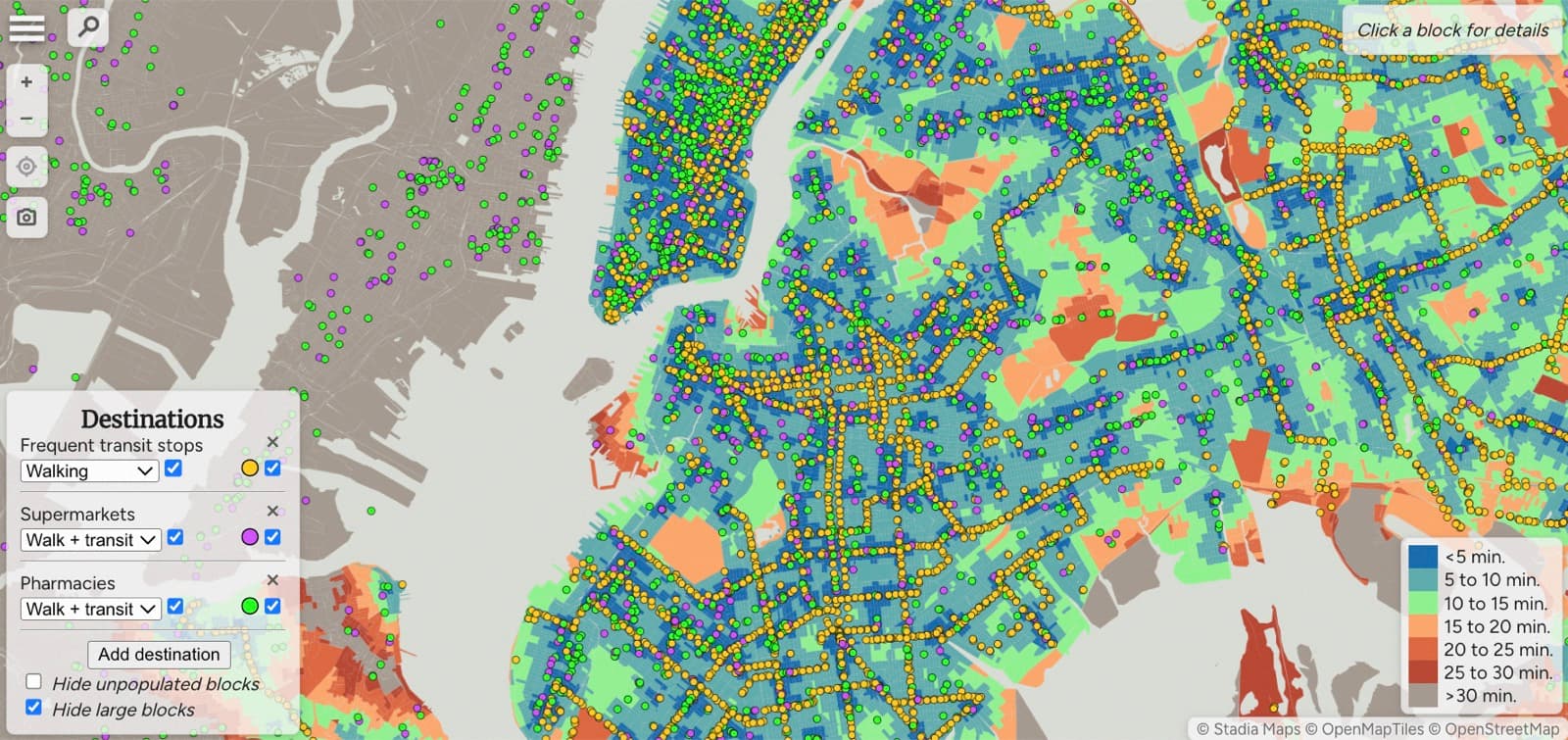
The map scores each neighborhood by how close it is to the places you care about. Add or remove a chip below to change what counts.
06 Find listings
How to find listings and avoid scams
Newcomers are a common target for rental scams, because you do not yet know which sites are real or what a normal price looks like in your area. Here is where to search, and what tells you a listing is fake.
Reputable platforms
- Zillow
- Apartments.com
- Realtor.com
- Property management company websites
- Employer relocation programs
- University off-campus housing boards
Red flags
- The rent is far below other listings in the same area.
- You are asked to wire money before you see the apartment.
- The landlord says they are abroad and cannot show you the apartment.
- You are pushed to sign or pay on the same day.
Never send money before you have seen the apartment and met the landlord or the agent in person. A price far below nearby listings is the most common sign of a fake listing.
Ready to apply with confidence? Build a renting plan made for your visa, your city, and your timeline.
This guide is built from public research. It is general information, not legal advice. Rental law differs by state and by city, and it changes. The “Key resources” links in chapter 04 point at the official tenant-rights page for the state you picked, and that page is the authority for your own lease.
Sources used in this guide:
- HUD.gov: fair housing rights
- CFPB: denied over a tenant screening report
- NYC DCWP: FARE Act broker fees
- NY Real Property Law §238-a
- NY General Obligations Law §7-108
- NY Real Property Law §226-c
- NYC Housing Court
- NYC Rent Guidelines Board
- Massachusetts: residential broker fees
- M.G.L. c.186 §15B
- MA Attorney General: Landlord and Tenant
- SF Rent Board
- Cal. Civ. Code §1950.5
- Cal. Civ. Code §1950.6
- Cal. Civ. Code §1946.2: just cause
- D.C. Code §42-3505.01: eviction grounds
- Colorado HB24-1098: for-cause eviction
- Chicago RLTO
- Fla. Stat. §83.57
- RCW 59.18.700: Washington rent cap
- RCW 59.18.650: Washington notice
- 765 ILCS 715: Illinois deposit interest
- NJ Truth in Renting
- Nova Credit